BƯỚC 01 / ẢNH THAM CHIẾU
Bắt đầu từ
một nhân vật rõ nét.
Tải lên một ảnh nhân vật làm tham chiếu nhận diện. Ưu tiên ảnh nhìn rõ gương mặt, tóc và trang phục để công cụ có đủ chi tiết khi tạo các góc nhìn mới.
Prompt yêu cầu giữ đặc điểm nhân vật và phong cách ảnh gốc, nhưng không sao chép tư thế, bố cục hay phông nền. Những chi tiết khuất sẽ được AI suy đoán, vì vậy cần kiểm tra lại sau khi tạo.
BƯỚC 02 / HIỂU BỐ CỤC
Năm ô hình.
Mỗi ô một nhiệm vụ.
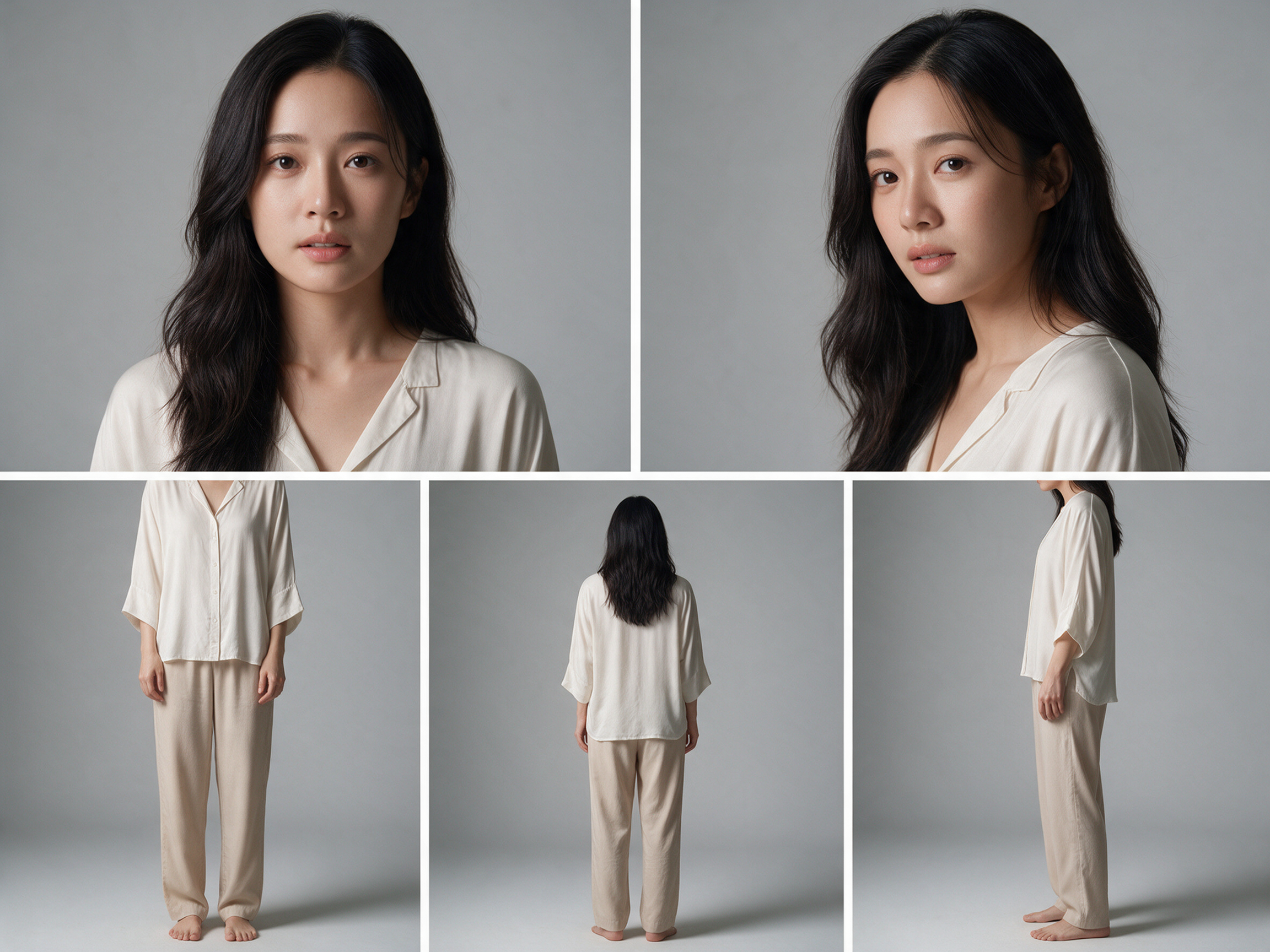
Hàng trên gồm hai chân dung; hàng dưới gồm ba góc thể hiện cơ thể và trang phục. Sơ đồ bên dưới giải thích bố cục, không phải ảnh kết quả.
Trong ảnh đầu ra: hàng trên khoảng 46% chiều cao, hàng dưới khoảng 54%; các ô ngăn bằng đường trắng mảnh.
BƯỚC 03 / IMAGE PROMPT
Giữ nguyên nhân vật.
Mở rộng góc nhìn.
Sau khi tải ảnh tham chiếu, sao chép toàn bộ prompt tiếng Anh bên dưới vào công cụ tạo ảnh.
Create a professional character sheet for exactly one character, based on the supplied character reference
image. Preserve the original character’s identity, facial features, apparent age, gender presentation, skin
tone, hairstyle, hair color, physique, body proportions, clothing, accessories, and visual style. Do not copy the
input image’s pose, composition, or background. Infer details that are not visible in a plausible way consistent
with the original design. Do not arbitrarily change the outfit or add accessories.
Output a single image in a horizontal 4:3 aspect ratio, containing exactly five panels in a fixed layout: the top
row occupies approximately 46% of the image height and is divided into two equal panels; the bottom row
occupies approximately 54% of the image height and is divided into three equal panels. All panels must meet
edge-to-edge, separated only by thin, straight, evenly sized white lines. No title, text, numbering, view labels,
logos, or watermarks.
Top-left panel: a front-facing portrait at eye level. The character looks directly into the camera, with the head
upright and a natural expression. Include the complete top of the head, hair, face, neck, both shoulders, and
upper chest. Keep the face sharp and do not crop the hair or crown of the head.
Top-right panel: a three-quarter portrait at approximately 30–45 degrees. The character turns the head and
shoulders slightly, with both eyes still clearly visible and the gaze directed toward the camera. Match the
framing and head size of the top-left portrait. Clearly show facial structure, hairstyle, and any existing
accessories.
Bottom-left panel: a front view showing only the body and clothing from the base of the neck downward, with
absolutely no head, face, chin, or hair visible. Crop naturally at the base of the neck along the top edge; do
not show an entire headless figure standing inside the panel. Include the shoulders, torso, both arms, lower
body, and feet or shoes if present. Keep the complete hemline and any extended outfit elements within the
panel. Use a neutral standing pose, with the arms resting naturally and not obscuring important clothing
details.
Bottom-center panel: a straight rear view showing the full body from the top of the head to the feet or shoes,
including all hair, nape, back, both arms, clothing, and any hems or trailing outfit elements. The character
faces completely away from the camera, without turning the head or revealing the face. Clearly show the
hairstyle from behind, the silhouette, and the construction of the outfit’s back.
Bottom-right panel: a true 90-degree side profile, with the body facing toward the left side of the image. Show
only the body from the base of the neck downward; absolutely no head, face, chin, or hair may appear. Crop
naturally at the base of the neck along the top edge, as in the bottom-left panel. Clearly show the side
silhouette, clothing thickness and construction, arm position, legs, shoes, and any hems or trailing outfit
elements. Do not substitute a three-quarter angle for a true side profile.
Ensure that all five panels depict the exact same character, wearing the same outfit and accessories, with
absolute consistency in color, material, patterns, tailoring details, and body proportions. Match the portrait
scale in the two upper panels; prioritize clear visibility of the silhouette and full outfit in the three lower
panels. Use a consistent neutral light-gray studio background, soft diffused lighting, true-to-life colors, and
subtle shadows. Preserve the input character image’s visual style, with sharp details and accurate anatomy.
Do not add panels, repeat viewing angles, overlap images, or allow content to cross panel borders. Do not add
other people, extra limbs, alternate clothing, or props absent from the original design.
Nút sao chép chỉ lấy prompt tiếng Anh, không kèm thông số hoặc hướng dẫn.
BƯỚC 04 / KIỂM TRA KẾT QUẢ
Đúng góc nhìn.
Đúng một nhân vật.
- Nhận diện: Gương mặt, tóc, màu da và tỉ lệ cơ thể không thay đổi giữa các ô.
- Trang phục: Màu sắc, chất liệu, họa tiết và phụ kiện thống nhất ở cả năm góc.
- Bố cục: Đúng 5 ô, không lặp góc; ô nghiêng là 90° chứ không phải góc ¾.
- Khung hình: Hai ô thân trước/nghiêng cắt tại gốc cổ; ô mặt sau có đủ đầu đến chân.
- Chi tiết: Không thêm chữ, người, chi thừa hay phụ kiện ngoài thiết kế gốc.
